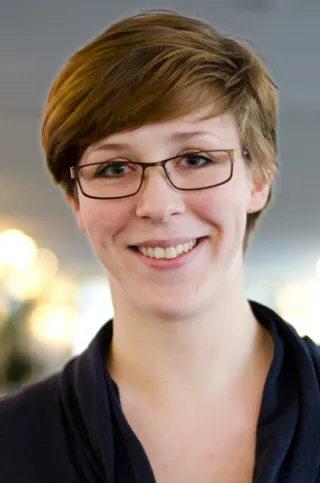
Because of my keen interest in literature. The course is only offered at a few universities, and I think it's great that the field of comparative literature is not limited to one nationality.
In which respect have or haven’t your expectations been fulfilled?
The broad spectrum of topics, which not only covers classic canonical texts but also various pop culture and rather unusual topics (e.g. zombies and pornographic literature), met and even exceeded my expectations. The course design allows a lot of freedom, which also exceeded my expectations. However, I had expected more literature from outside Europe to be covered; my expectations were not met in this regard.
Which aspect of your degree programme do you enjoy most?
The exchanges and discussions with fellow students, familiarising myself with various topics, literature research and tours of libraries at RUB.
What has been your biggest challenge to date?
At the beginning of my studies, writing academic papers. Looking back on my entire degree programme, definitely the uncertainty about what I wanted to do professionally after graduation and, subsequently, doing internships and trying out different industries.
What would you like to become after completing your degree?
I am currently working for the RUB's university marketing department and can definitely imagine working in this field after graduation. Otherwise, I also find the publishing industry and event management very interesting.
Which advice would you like to give to students who consider enrolling in this degree programme?
I highly recommend the events organised by the Comparative Literature Student Council: I had some helpful conversations there and found some great companions.
My advice to future students: you should do a lot of reading, and don't be afraid of French and English!
Imke Kuhn is a fourth-year student of Comparative Literature Studies. She is pursuing the Bachelor of Arts degree, 2-subject programme. Imke's second subject is Art History.
What made you choose this degree programme?
Because of my love for literature, which I had not discovered until the sixth form. I was interested a transnational approach to literature.
In which respect have or haven’t your expectations been fulfilled?
The “transnational” aspect does indeed play a huge role, but it is often difficult to read texts in the original language, as most students are only familiar with English. Consequently, we most often make use of German translations, which, however, bear their own problems on close examination. What I've really liked about the degree programme was the great diversity of seminars that focus on various subjects so that every student may choose his or her own area of specialisation.
Which aspect of your degree programme do you enjoy most?
Reading. Plain and simple. I simply do love reading, especially novels of all genres. This made it easy to prepare for the oral BA exam, as I was able to select exactly two topics that I was very much interested in.
What has been your biggest challenge to date?
Not being able to read everything I was supposed to. The reading requirements in some of the seminars are very high and can hardly be managed if you want to do anything else outside the degree programme. And so I spent the odd hour in class having read only the cliff notes.
What would you like to become after completing your degree?
Comparative Literature Studies really was my Minor degree which, in my opinion, does not offer many career options. Perhaps in combination with my other degree, Art History. Working for a publishing house might be quite interesting. However, I will discontinue Comparative Literature Studies in my Master's degree.
Which advice would you like to give to students who consider enrolling in this degree programme?
You should do a lot of reading, and don't be afraid of French and English! Theory does not figure largely in the curriculum, so you don’t have to be afraid of it.