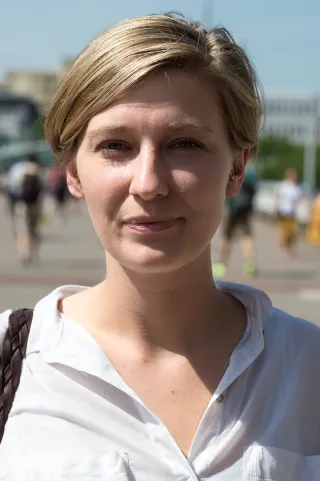
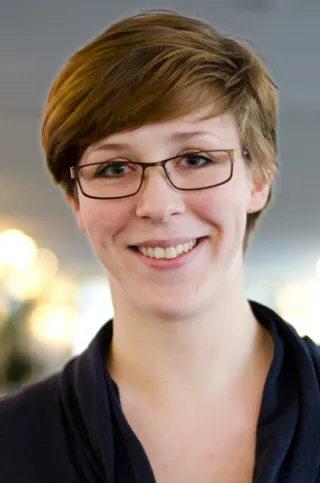
Studying art history gives me the opportunity to combine my interest in culture and history with academic work. I also wanted to study a subject that explores interdisciplinary issues and offers a wide range of options.
In which respect have or haven’t your expectations been fulfilled?
During my studies, I quickly learned that I was given a high degree of personal responsibility. In art history in particular, I don't have to stubbornly memorise facts, but am encouraged to think for myself. At the beginning of my studies, I didn't expect to be able to study in such a flexible and self-determined way.
Which aspect of your degree programme do you enjoy most?
I particularly like the fact that the programme is so diverse. It offers an overview of all genres and periods of art, with the opportunity to set your own priorities. In addition, there are foreign language courses, a variety of excursions, practical seminars and collaborations with museums and the university's art collection.
What has been your biggest challenge to date?
At the beginning of my studies, it was challenging to speak in front of large groups and present my own research. Over the course of my studies, I learned to use this challenge productively. Today, I enjoy speaking in front of large audiences and sharing my knowledge.
What would you like to become after completing your degree?
After completing my studies, I definitely want to pursue a doctorate so that I can continue my research. I like the fact that I won't be tied to a specific profession afterwards, but will be able to pursue different paths.
Which advice would you like to give to students who consider enrolling in this degree programme?
Take advantage of the many excursions on offer to put your knowledge into practice. I enjoy discussing original works the most.
Being able to work and research autonomously, discovering the bigger picture in the arts of the different centuries – this is what I enjoy most!
Imke Kuhn is a fourth-year student of Art History. She is pursuing the Bachelor of Arts degree, 2-subject programme. Imke's second subject is Comparative Literature Studies.
What made you choose this degree programme?
In order to study a subject that is close to my heart and that I enjoy a lot – even though the career opportunities are rather mediocre.
In which respect have or haven’t your expectations been fulfilled?
My expertise regarding art history has been naturally enhanced – not, however, through seminars as such but rather through the efforts I poured into writing my theses. I’d never expected seminars to focus on oral presentations so much. The quality of the presentations very much depends on the people giving them, so there are sometimes dry spells to be sat through.
Which aspect of your degree programme do you enjoy most?
Being able to work and research autonomously, discovering the bigger picture in the arts of the different centuries. In fact, I’ve liked just about everything about my degree course, because I have relatively free choice of seminars and, therefore, can follow my interests.
What has been your biggest challenge to date?
Completing two degree programmes with optional modules in six semesters. I have not succeeded, either, which was perhaps caused by the fact that I’d had a baby at that time. Studying with a child has been my biggest challenge so far, as leaves of absence are handled differently in every degree programme.
What would you like to become after completing your degree?
I could well imagine working in the field of museum pedagogy, but I’m not fully decided yet. Perhaps I will do something completely different after finishing my degree.
Which advice would you like to give to students who consider enrolling in this degree programme?
Pop by at the university and sit in a few seminars or lectures in order to get an impression of how they work. Consider whether you are able to do a lot of reading. In the optional module, you should attend seminars that will advance your understanding of art history as well, thus acquiring additional competencies.