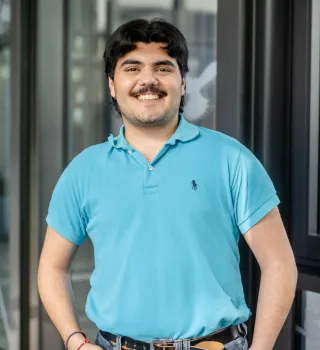
I have always been fascinated by history. I took it as an advanced subject in my A-levels and spent a lot of my free time studying ancient Greece because I felt it brought me closer to my homeland. And since I was toying with the idea of becoming a teacher, it was very clear to me which path I would take.
In which respect have or haven’t your expectations been fulfilled?
I didn't really have any expectations of the study programme, but was looking forward to certain things, such as historical work that is not tied to a specific curriculum. This means, basically, that one semester I might be learning about trade relations between medieval Bruges and Nuremberg, and the next semester about literature during the time of National Socialism. However, what I felt was a little lacking for me was the history of non-European cultures in the history programme, which did not have as much contact with European culture as, for example, South (East) Asian cultures.
Which aspect of your degree programme do you enjoy most?
I find it fascinating to immerse myself in a world that seems completely unfamiliar to us, yet in some ways is similar, through a wide variety of sources, be they texts, images or even sculptures. I see looking back at the past and coming to terms with it as one of the most important tasks of our society, and even though many people find it difficult, I personally find it fascinating to reflect on what has happened before.
What has been your biggest challenge to date?
The short answer: IPS! The long answer: Actually, reading older sources. I'm not talking about sources in Latin or Ancient Greek, but medieval, ‘German’ sources. Even native German speakers can break a sweat here.
What would you like to become after completing your degree?
With my degree, I will actually do ‘something with media’. During my studies, I did various internships and jobs in social media and online editing, and my studies have also enabled me to critically question sources and then build on them in a successful manner.
Which advice would you like to give to students who consider enrolling in this degree programme?
I would really recommend everyone to learn at least a little Latin. You don't have to be a high achiever, but it really helps tremendously in your studies. Especially when it comes to Roman antiquity and the Middle Ages.
Working independently is what I enjoy most in my degree programme. Being able to delve into a subject you're interested in is great!
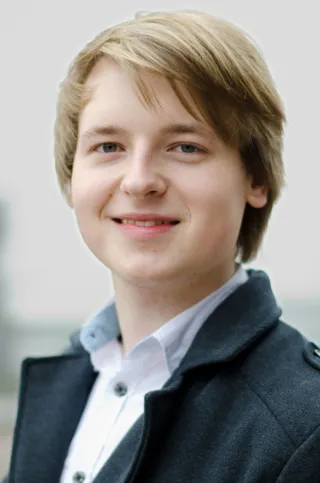
André Heckmann is a first-year student of History. He is pursuing the Bachelor of Arts degree, 2-subject programme. André's other discipline is Romance Studies Spanish.
What made you choose this degree programme?
I developed a keen interest in history during my final school years and I knew instantly that this subject would suit me well.
In which respect have or haven’t your expectations been fulfilled?
My expectations, which are shared by many, namely that a lot of reading will be required, were confirmed within the first two weeks. But it is still quite manageable. What I found surprising was the excellent way in which the initial integration of new students was solved by proving Integrated Proseminars (IPS), where many activities take place in a classroom context. This approach resembles a schoolroom situation, whilst, at the same time, easing your way into university structures.
Which aspect of your degree programme do you enjoy most?
Being able to work in an independent manner, no doubt about that! Being able to delve into a subject you're interested in is great.
What has been your biggest challenge to date?
Researching non-German language literature. Students who speak several languages do have a clear advantage in that regard.
What would you like to become after completing your degree?
Postdoc researcher at a university, researching and passing on the topics I'm interested in.
Which advice would you like to give to students who consider enrolling in this degree programme?
You've got to be aware that there is a lot of reading to do; if you're not, this degree programme will be torture. Moreover, you will be doing yourself a favour by routinely preparing for and revising lectures.