Management & Consulting in Sports, Master 1 subject

  • How does the management of sport organisations work?
  • Which consultancy approaches for actors in sport are there (individual consultancy, organisational consultancy)?
  • What are the features of sport economics, sport politics and sport development?
  • How is marketing management in the field of sport structured?
  • How can aspects of organisational and personnel psychology be transferred into sport organisations?
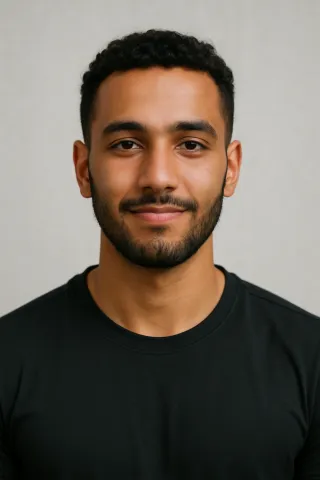
Jean Philippe Grave

I would like to work in sports management later on, preferably in projects or in organisational development for clubs or associations.

Jean Philippe Grave  – M.Sc.
Jean Philippe Grave

What made you choose this degree programme?

I studied prevention and rehabilitation for my bachelor's degree, but realised that I was more interested in the organisational side of sport. The master's degree in management and consulting in sport was an opportunity for me to move into sports management and strategy.

In which respect have or haven’t your expectations been fulfilled?

The practice-oriented content definitely lived up to my expectations. I wanted to understand how sports organisations work, and you learn that really well here. What was a little different than I had imagined was that the introduction is broader than expected. You don't dive straight into event management, but get to know many different areas. In retrospect, however, that was valuable.

Which aspect of your degree programme do you enjoy most?

I like the mix of sports and management. Above all, it's fun to work on real-life problems and develop solutions that you can actually use later in your daily work.

What has been your biggest challenge to date?

The transition from a health-oriented bachelor's degree to more economics-oriented content was unfamiliar at first. In addition, project work requires a lot of organisation, but you quickly get used to it.

What would you like to become after completing your degree?

I would like to work in sports management later on, preferably in projects or in organisational development for clubs or associations.

Which advice would you like to give to students who consider enrolling in this degree programme?

You should have an interest in management, organisation and strategic work. And you should take advantage of the practical projects during your studies, as this is where you learn the most for your future career and can establish valuable contacts.

Profile

Degree
Master of Science
Start
Winter semester
Duration
4 semesters
Classroom language
German
Cost
Admission
Restricted
Information on enrollment/application for German applicants

Information on enrollment/application for German applicants

Application information for international applicants

Application information for international applicants

What's it all about?
This degree programme is unique, because ...
it is the only Master's degree in sports offered at a university that integrates Management and Consulting.
It provides the opportunity to specialise in the following fields ...
Who is suited?
Those who wish to enrol in this degree programme,
has: good grasp of the principles of research methodology and economics

enjoys: conducting critical discourse into sport management questions and the development of problem-solving approaches

struggles through: scientific projects
This degree programme is suited for graduates in the following subjects
  • Sport science
Graduates from this degree programme frequently work
  • in non-profit, municipal sports organizations
  • in public sports administrations
  • in commercial sports organizations
  • in event and marketing agencies
  • organizational and management consultancies
  • at Olympic training centres and sports performance centres
  • in universities
And else?
An internship ...

is optional.

Studying abroad ... can be covered voluntarily.
Where do I find help?
Contact students

Fachschaft: Sportwissenschaft

Building, Room: SW, Raum E.083

Phone: +49 (0)234 / 32-27906

E-mail: sportfachschaft@rub.de

Website Fachschaft

Matthias Winter

It's fun to see how scientific work has a direct impact.

Matthias Winter
Matthias Winter

What made you choose this degree programme?

I wanted to understand why training works and how performance can be scientifically measured and improved. The RUB programme combines practical sports with biomechanics, physiology and training science – exactly the mix I was looking for.

In which respect have or haven’t your expectations been fulfilled?

Above all, my expectations were met in terms of the practical components and the depth of the training science content. What was unexpected was how scientific the course is in parts – biomechanics and physiology were more challenging than I had anticipated.

Which aspect of your degree programme do you enjoy most?

Definitely diagnostics: collecting performance data, analysing movements, planning individual training programmes. It's fun to see how scientific work has a direct impact.

What has been your biggest challenge to date?

The biggest challenge was working through the broad knowledge base – from medicine to statistics to didactics. You need good self-organisation and motivation.

What would you like to become after completing your degree?

My aim is to work in the field of performance diagnostics or training support, ideally at a performance centre, a sports medicine facility, or in sports clubs.

Which advice would you like to give to students who consider enrolling in this degree programme?

Enjoy exercise and science.
Don't underestimate theory.
Take advantage of practical opportunities and labs.
And: Try out lots of different things during your studies to find your focus.

Nicole Sälzer

Studying sports at RUB immediately appealed to me because it is very diverse and you really get to know all areas of sports science.

Nicole Sälzer  – B.A.
Nicole Sälzer

What made you choose this degree programme?

I loved PE at school and took it as an advanced course. It quickly became clear to me that I didn't just want to do sports myself, but also teach it at some point. Studying sports at RUB immediately appealed to me because it is very diverse and you really get to know all areas of sports science. English/American Studies came ‘on top’ because I would like to teach at a secondary school later on.

In which respect have or haven’t your expectations been fulfilled?

My wish that the programme would not be limited to seminar rooms and lecture halls has been fulfilled. From the very first semester, students stand in front a group and teach trial lessons.

My wish for more pedagogy and subject didactics in the bachelor's programme has not quite come true. There is little difference in content between the B.A. and the B.Sc., and I would have liked to see a stronger focus on teaching earlier on.

Which aspect of your degree programme do you enjoy most?

Honestly, the sports seminars and excursions! Lectures are nice, but getting out, doing sports, trying new things – that's what makes studying really cool. My highlight was the snow sports seminar in Valmorel. Two weeks of skiing with a great group... unforgettable!

What has been your biggest challenge to date?

Definitely the organizational aspect. I spent a semester abroad, but then had to catch up on several exams and ended up taking three written exams in two weeks.

What would you like to become after completing your degree?

I am studying for a double bachelor's degree so that I can become a teacher at a secondary school later on. The combination of sport and English is perfect for me.

Which advice would you like to give to students who consider enrolling in this degree programme?

Sports science at RUB is definitely a great choice! You just need to think carefully beforehand about where you want to go with it – competitive sports, health, research or teaching.

For me, the two-subject model is ideal. I can only recommend it and would be thrilled if more people decided to choose this path.

Anke Buchmüller

I like the practice-oriented lab sessions and our research projects best.

Anke Buchmüller  – M.Sc.
Anke Buchmüller

What made you choose this degree programme?

After completing my bachelor's degree, I wanted to delve deeper into training and health science. The English-language master's programme appealed to me immediately because it has an international approach and a strong focus on research.

In which respect have or haven’t your expectations been fulfilled?

The academic depth and the work with current studies fully met my expectations. I was unsure about the language at first, but that quickly faded because academic literature is almost entirely in English anyway.

Which aspect of your degree programme do you enjoy most?

I like the practice-oriented lab sessions and our research projects best. You can see directly how training, health and performance are connected. It's also fun to work with students from very different countries.

What has been your biggest challenge to date?

Starting in English was unfamiliar because I wasn't used to it from my bachelor's degree. But it didn't take long to get used to it because you read and use English publications all the time anyway.

What would you like to become after completing your degree?

I would like to work in the field of performance diagnostics later on, either in applied research or at a sports science institution.

Which advice would you like to give to students who consider enrolling in this degree programme?

You shouldn't be afraid of English and should have a genuine interest in scientific work. If you're interested in research, lab work and an international perspective on sports science, this is the programme for you.