Classical Philology (Latin, Greek), Master 2 subject

  • How can classical texts be recoded and recoded?
  • Which stages did the reception history of ancient texts undergo?
  • In what way do the texts influence each other?
  • What kinds of ideas were expressed (by which linguistic means)?
  • How have classical evolved and changed?

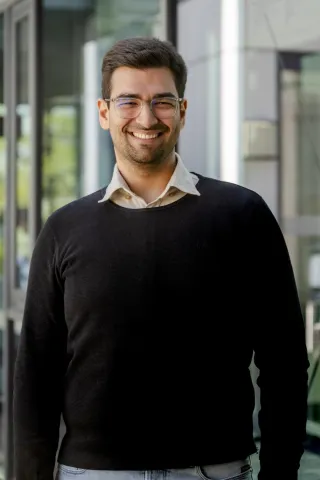
There are texts that leave you feeling a little perplexed at first, (...) Sometimes while I'm reading, I find myself taking on the role of a detective who has a case to solve, so to speak.

Okan Keles, Master

What made you choose this degree programme?

Originally, I simply wanted to do the Master of Education, as I had decided on becoming a teacher. However, during my studies, I developed an interest for a specialised Master's degree.

In which respect have or haven’t your expectations been fulfilled?

It was important to me to gain a more in-depth understanding of Ancient Greek in a specialist Master's programme, and my studies provided me with this opportunity. I also learned about the numerous perspectives from which Latin and Greek texts can be viewed; there is no singular approach. Furthermore, in my Extension Area II (which is only available in the single-subject Master of Arts programme), I was able to have any course related to the subject credited. This allowed me to also have my participation in modern foreign language courses credited. All in all, I am very satisfied with my decision to study this subject. Better resources would perhaps have been more welcome, particularly in terms of numerous online licences. 

Which aspect of your degree programme do you enjoy most?

All the moments of clarity when reading. There are texts that leave you feeling a little perplexed at first, but as you delve deeper into them, the overall picture gradually emerges. Sometimes while I'm reading, I find myself taking on the role of a detective who has a case to solve, so to speak.

What has been your biggest challenge to date?

Translating and interpreting a text from scratch, without researching the literature. However, with a little practice, you can do it.

What would you like to become after completing your degree?

For now, it was important to me to complete a specialised degree programme. Everything else will follow.

Which advice would you like to give to students who consider enrolling in this degree programme?

I can only advise you to study the subject that you are most enthusiastic about. I am convinced that if you are good at something, you can apply the skills you acquire during your training to other fields as well. In my experience, you put in more effort when you are dealing with things that interest you most. So take heart and choose what you are most passionate about!

Profile

Degree
Master of Arts
Start
Winter- and summer semester
Duration
4 semesters
Classroom language
German
Admission
Not restricted, application at the faculty required
Information on enrollment/application for German applicants

Information on enrollment/application for German applicants

Application information for international applicants

Application information for international applicants

What's it all about?
This degree programme is unique, because ...
it provides the foundation for conducting in-depth discourse regarding classical-philology issues and for focusing on individually selected areas of interest.
It provides the opportunity to specialise in the following fields ...
  • Classical Latin
  • Medieval and Neo-Latin
  • Comparative Literature Studies
  • Literary Studies
  • History of Reception
Who is suited?
Those who wish to enrol in this degree programme,
have:
  • excellent Latin/Greek-language skills
  • language skills in two modern foreign languages
  • understanding of history, antiquity, mythology
  • excellent german language skills

enjoy:

  • literary and comparative issues
  • research-driven studies
  • working in an independent manner, in-depth study of texts

struggle through:

  • challenging texts and issues
  • complex material
  • self-reliant learning
This degree programme is suited for graduates in the following subjects
  • B.A. Classical Philology
Graduates from this degree programme frequently work
  • at universities, in research and in academia
  • in libraries and archives
  • in radio, television and print media
  • in the publishing industry
And else?
An internship ...

is optional.

Studying abroad ... can be covered voluntarily.
Where do I find help?
Academic advisory office

Website academic advisory office

Contact students

Fachschaft: Klassische Philologie

Building, Room: GB 2/58

Phone: +49 (0)234 / 32-23894

E-mail: fr-klassphil@rub.de

Website Fachschaft

You get the opportunity to express your creativity, develop your own ideas and practise working with literature and culture that have had a significant influence on our world to this day and continue to do so. 

Felix Meinefeld, Bachelor

What made you choose this degree programme?

My educational journey has always been accompanied by an interest in language and studying foreign languages. Latin, in particular, sparked my enthusiasm for languages at an early age and has always been a great help to me while learning English and Spanish.

After initially studying something else and becoming dissatisfied with it, I wanted to return to my passions: Latin (and sport). It quickly became clear to me that I could find joy in classical philology, as the ancient world and the Latin language had never truly ceased to fascinate me.

In which respect have or haven’t your expectations been fulfilled?

Working with the texts was pretty much what I expected: translation, interpretation, discussion, but also vocabulary learning and grammar revision at the beginning of my studies. In particular, the sometimes productive engagement with ancient works and their reception up to the present day exceeded my expectations.

Which aspect of your degree programme do you enjoy most?

Working with literature, pondering Latin/Greek texts and constantly engaging with cultural phenomena. As classical philology is interdisciplinary in nature, there are always new opportunities to adopt different perspectives and broaden one's horizons.

The Department of Classical Philology at RUB is also outstanding: friendly and helpful students and lecturers create a pleasant atmosphere and a very productive relationship between teaching and learning.

What has been your biggest challenge to date?

The biggest challenge is probably the amount of vocabulary you have to learn at the beginning of your studies. There was quite a lot to take in during the first two semesters. Fortunately, I quickly discovered learning techniques that suited me, such as learning vocabulary with the Anki learning software, which made my life easier in many ways.

Of course, learning Ancient Greek as part of the Graecum and the constant reading required during my studies also present certain challenges, but these are easy to overcome.

What would you like to become after completing your degree?

I am studying to become a teacher and would like to teach Latin and PE. But who knows what else might come up outside of school.

Which advice would you like to give to students who consider enrolling in this degree programme?

Classical philology has so much to offer. You get the opportunity to express your creativity, develop your own ideas and practise working with literature and culture that have had a significant influence on our world to this day and continue to do so. If you are passionate about this subject and want to pursue it, Bochum offers excellent resources.

It doesn't hurt to keep track of what you should be able to do by the end of your bachelor's degree from the very beginning and to engage with the relevant texts throughout your studies. As they say, studying is a marathon, not a sprint.

Apart from that, I can only recommend taking advantage of the many opportunities offered by the university. From language courses to university sports and networking among students (e.g. within the student council) – these are all things that can make your time at university more enjoyable and productive.

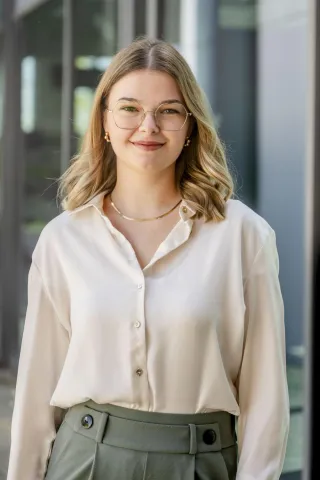
 

What I enjoy most is reading and translating ancient texts, particularly historical works and epics.

Vincent Seuberlich, Bachelor

What made you choose this degree programme?

Based on my preferences during my school days. I chose the two subjects that interested me most back then.     

In which respect have or haven’t your expectations been fulfilled?

As far as the translation courses are concerned, my expectations have been largely fulfilled. However, at the beginning, I had no idea what specialist areas were associated with this subject in terms of tradition research, etc., and how diverse the possibilities are.

Which aspect of your degree programme do you enjoy most?

Reading and translating ancient texts, particularly historical works and epics.

What has been your biggest challenge to date?

The biggest challenge so far has been consistently engaging with secondary literature for seminar papers.

What would you like to become after completing your degree?

Hopefully a teacher.

Which advice would you like to give to students who consider enrolling in this degree programme?

My tips would be: Reading and comparing as much as possible (especially in original language) and finding out what you enjoy, and not spending too much time memorising.

There is a lively exchange between students and teachers, as well as openness to student ideas and suggestions. 

Anna Maria Schröter, Bachelor

What made you choose this degree programme?

During my first degree, I was particularly interested in historical language stages and palaeography. I already enjoyed Latin at school, which is why I decided to deepen my knowledge in this area and immerse myself even more in the fields of language history and palaeography. The idea of studying antiquity, its languages and literature inspired and motivated me, which is why I chose classical philology.

In which respect have or haven’t your expectations been fulfilled?

My expectations were met above all in that I gained a multifaceted approach to ancient literature and a nuanced view of its language and contexts. One area in which my expectations were even exceeded is the community spirit in our seminar: there is a lively exchange between students and teachers, as well as openness to student ideas and suggestions. Students also receive individual support and good advice in the learning process. On the other hand, my personal expectation that I would immediately be ‘back in the swing of things’ after a long break from Latin was not entirely fulfilled. I realised that it takes time to gain confidence in grammar, vocabulary and translation techniques. However, this is not a disappointment, but a valuable experience: you can and should give yourself time to rebuild your skills and get used to the high but rewarding workload.


Which aspect of your degree programme do you enjoy most?

I really enjoy developing my own research questions based on the texts we cover and discussing them in the seminar. I find it particularly fascinating how topical and relevant ancient literature is in today's world. It is precisely through the modern reception of ancient literature that I realise how changeable the material is and how new perspectives on ancient myths can emerge. I am also very enthusiastic about the detailed work on the texts: one constantly discovers new linguistic and stylistic subtleties that make the texts multifaceted. This becomes particularly clear when translating – the text is like a puzzle that you decipher piece by piece in order to get a little closer to the ancient world. I am also fascinated by the analysis of the history surrounding the transmission of ancient texts, as well as the technique of preparing texts from manuscripts or papyrus finds for today's readers and restoring the original wording.

What has been your biggest challenge to date?

The biggest challenge was getting back into the language at the beginning of my studies, as it had been several years since I received my Latinum certificate. However, with practice and perseverance, things quickly improved, and the support offered by our seminar was very helpful, especially in the early stages of my studies.

What would you like to become after completing your degree?

Ideally, I would like to work in academic research and teaching later on, but I could also imagine teaching at school as a career. In both cases, I would be able to pursue what I enjoy most: working with people and teaching the subjects I love. For my future, I hope to share my passion for classical philology with students and to be able to actively pursue and advance interdisciplinary research in this field – on the one hand, to deepen our understanding of the past of language and literature, and on the other, to convey its significance for the present and the future.

Which advice would you like to give to students who consider enrolling in this degree programme?

At the beginning, it is completely normal to have to look up a lot of vocabulary and not understand the texts immediately – this will pass, but it takes patience and practice. So give yourself time to settle into your studies and develop routines. Don't be afraid to ask questions or ask for help: with our study advisors, tutorials and student council, there are many places you can go for advice and support. Classical philology is a subject that demands a lot of time, but with good organisation it is doable, and the sense of achievement is all the greater when you notice how much progress you are making. And one last tip: the more often you read ancient texts, the faster you will find your way not only in the language but also in the contexts. This will also help you discover more quickly what inspires you about antiquity – this enthusiasm will be your driving force, carrying you through the more challenging phases of your studies.

I enjoy translating from German into Latin the most. It's a way of working with the language that I never learned at school.

Carlotta Felderhoff, Bachelor

What made you choose this degree programme?

I was fortunate to have a wonderful Latin teacher from Year 6 onwards who was passionate about her subject. Perhaps that is why I always enjoyed Latin lessons the most at school. I liked both decoding the sentences and the myths that were covered in class. I was also fascinated by the structure of the Latin language. As I would like to become a teacher in the future, I have found two subjects in German and Latin that, in my opinion, complement each other perfectly and that I really enjoy.


In which respect have or haven’t your expectations been fulfilled?

In the introductory courses, the main focus is on establishing a very good foundation for translation. All case functions, participial constructions, etc. are explained in great detail. I would say that it was thanks to this step-by-step approach that I finally understood some of the grammar properly during my studies. Perhaps it is precisely because the classical philology seminar is so small and therefore somehow familial that you are never left alone with your questions. Even if you don't understand something right away, the teachers patiently explain it again. In comparison to my German courses, this is not always possible there due to the large number of students. Especially as a first-year student, I always felt well taken care of thanks to this appreciative style of teaching. It exceeded my expectations. In addition, during the first two semesters, I gained a very good overview of the historical background of antiquity and important approaches and tools for working with texts in an academic context.


Which aspect of your degree programme do you enjoy most?

I enjoy translating from German into Latin the most. It's a way of working with the language that I never learned at school. I find that it offers me a completely different approach to the language.


What has been your biggest challenge to date?

One major challenge that I hadn't anticipated was learning Ancient Greek, or Graecum. Learning a foreign language with an alphabet that was completely new to me within a year was/is a challenge for me.


What would you like to become after completing your degree?

After completing my studies, I would like to become a teacher and inspire my future students with the same enthusiasm for Latin that my teacher had back then.

Which advice would you like to give to students who consider enrolling in this degree programme?

Keep at it! That goes for both translating and learning vocabulary! The amount of basic vocabulary seems overwhelming at first, but learning a small amount of vocabulary every day makes the whole thing much more manageable.

Other degree programs in the subject