Slavonic Studies, Master 2 subject

  • How does one learn a language and then learn further languages?
  • How is speech processed by the brain?
  • How have Slavic literatures and cultures developed, and what is happening in Central (Eastern) European countries today?
  • What are the characteristics of Slavic languages and cultures?
  • What happens if children grow up bilingually?
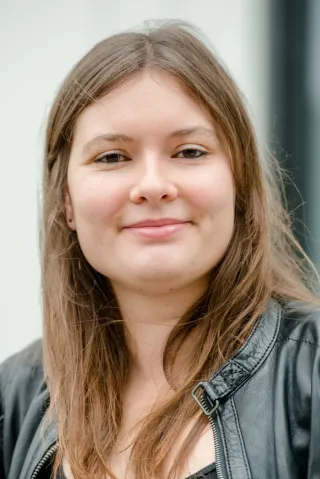
Marta Osenniaia

My degree in Slavonic Philology has sparked my interest in current political and social developments in the Slavic world and is shaping my academic path in my future research.

Marta Osenniaia  – Bachelor
Marta Osenniaia

What made you choose this degree programme?

Because, given my Slavic heritage and my prior language knowledge, I wanted to study other Slavic languages in greater depth. I was also particularly intrigued by the opportunity to spend a semester abroad in a Slavic country such as Georgia, the Czech Republic or Poland as part of my degree.

In which respect have or haven’t your expectations been fulfilled?

The Slavonic Studies programme has exceeded my expectations in many ways. I was particularly surprised by how keenly it sparked my interest in the ambivalent history of the Soviet Union, and that this has led to such a strong passion for Russian literature. Furthermore, the programme offers a wide variety of seminars, enabling students to find focus areas that suit their interests. The only thing I could wish for future students is the opportunity to spend a semester abroad in Belarus, Russia or Ukraine once the Russia-Ukraine war has ended, allowing them to immerse themselves even more deeply in Slavic culture.

Which aspect of your degree programme do you enjoy most?

The opportunity to actively contribute my existing knowledge to the seminars and to take part in group discussions on both literary works and current issues. I also enjoy getting together with the lecturers for film evenings.

What has been your biggest challenge to date?

The biggest challenge for me so far has been choosing between the many different and interesting seminars.

What would you like to become after completing your degree?

I would like to pursue a career in research, and I can see myself doing a PhD after completing my Master’s degree. Ultimately, I would like to work at a university – either in the field of Russian as a foreign language or, if the opportunity arises, in teaching, because I find it particularly exciting to keep learning new things throughout my life and to share this knowledge with interested students.

Which advice would you like to give to students who consider enrolling in this degree programme?

Give it a go, feel free to stop by, have a chat with the student representatives; the Slavonic Studies department is always delighted to welcome new students! The subject is more relevant today than ever and also offers numerous opportunities to combine it with other degree programmes.

Profile

Degree
Master of Arts
Start
Winter- and summer semester
Duration
4 semesters
Classroom language
German
Cost
Admission
Not restricted, application at the faculty required
Information on enrollment/application for German applicants

Information on enrollment/application for German applicants

Application information for international applicants

Application information for international applicants

What's it all about?
This degree programme is unique, because ...
it helps to gain a deeper understanding of Eastern (Central) European languages, cultures and literatures.
It provides the opportunity to specialise in the following fields ...
  • Communication competencies in Russian or Polish
  • Critical discourse regarding theories and methods
  • Autonomous compilation of scientific problems and the presentation thereof
  • Russian or Polish literature and culture (image, film)
  • Linguistics of the language system, psycholinguistics, corpus linguistics
  • Gender and identity in language and literature
  • Cultural and historical events, rhetoric and poetics
Who is suited?
Those who wish to enrol in this degree programme,
have:
  • an interest in Slavic languages and cultures
  • willingness to do a lot of reading
  • curiosity and research drive
  • good language skills

enjoy:

  • literature (theoretical and literary)
  • debating and presenting
  • autonomous research

struggle through:

  • the complexities of specialist literature and theoretical models
This degree programme is suited for graduates in the following subjects
  • Slavonic philology
  • Russian culture
  • related subjects (individual guidance recommended)
Graduates from this degree programme frequently work
  • in academia
  • in cultural institutions and foundations
  • in the media and publishing industry
  • as editors and teachers
  • in the educational and charity sector
And else?
An internship ...

is recommended. It is done prior to the degree course.

Studying abroad ... is recommended.
Duration: 1 semester
Where do I find help?
Academic advisory office

Dr. Thomas Skowronek

Building, Room: GB 5/158

E-mail: beratung-slav-phil@rub.de

Website academic advisory office

Contact students

Fachschaft: Slavistik

Building, Room: GB 8/55

Phone: +49 (0)234 / 32-28357

E-mail: fr-slavistik-bochum@rub.de

Website Fachschaft

Marija Terskich

Thanks to different seminars and courses I have acquired new favourite authors whom I would probably never have discovered if not for this degree course.

Marija Terskich  – Bachelor's degree
Marija Terskich
Marija Terskich is a third-year student of Slavonic Studies. She is pursuing the Bachelor of Arts degree, 2-subject programme. Marija's second subject is Islamic Studies.

What made you choose this degree programme?

Because of my origins, and because I wished to broaden my knowledge of Slavic languages and countries.

In which respect have or haven’t your expectations been fulfilled?

I have the opportunity to learn several new Slavic languages and to improve my Russian language skills. So far, the courses have lived up to my expectations.

Which aspect of your degree programme do you enjoy most?

Thanks to different seminars and courses, my voracious appetite for reading is being satisfied by various authors and epochs of the Slavic countries. I have acquired new favourite authors whom I would probably never have discovered if not for this degree course.

What has been your biggest challenge to date?

Finding a suitable subject for my term paper.

What would you like to become after completing your degree?

I would like to work as a translator. Many good Slavic authors exist who are barely known or not known at all in other countries, because they have never been translated. I would like to change that, even though this might sound utopic.

Which advice would you like to give to students who consider enrolling in this degree programme?

You should definitely have fun in your degree course. If you enjoy learning about new languages and cultures, you have come to the right place.

Other degree programs in the subject